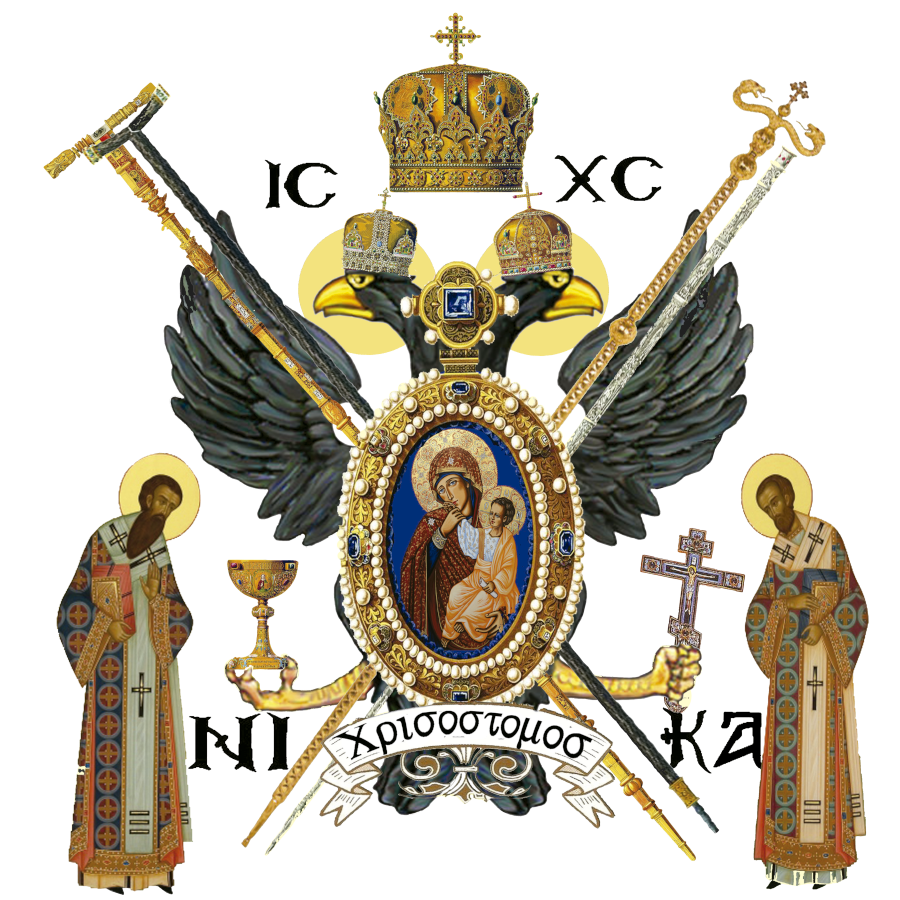
IGLESIA ORTODOXA DEL ECUADOR Y LATINOAMERICA - ΓΟΧ
METROPOLIS ORTODOXA AUTONOMA DE ECUADOR Y LATINOAMERICA ΓΟΧ ****** ΙΕΡΑ ΜΗΤΡΟΠΟΛΙΤΙΚΗ ΣΥΝΟΔΟΣ ΓΟΧ ΠΑΤΡΩΟΥ ΕΟΡΤΟΛΟΓΙΟΥ
PRESENTACION SU 1RA VISITA Proclamación Eclesiológica/ Ecclessiology NOTICIAS-CALENDARIO-2011 HISTORIA-NOTICIAS / HISTORY-NEWS ADMINISTRACION-SINODO / ADMINISTRATION-SYNOD Sucesion Apostólica FE ORTODOXA / ORTHODOX FAITH OTROS SITIOS En defensa de Vladyka Chrysóstomos Registro Oficial

La Metrópolis Ortodoxa Autónoma de Ecuador y Latinoamerica, por medio de sus miembros y  bajo la protección canónica de Su Eminencia Metrópolita Chrysóstomos, hacen esta formal y pública declaración sobre cuales son sus criterios, enunciados y conceptos sobre la comunidad ortodoxa, tanto en lo general como en lo particular, para sacar de dudas o malas interpretaciones, y por ello declara:

1.) Creemos y confesamos que la Santa Iglesia Católica Apostólica Ortodoxa,  es la UNICA IGLESIA revelada por Dios a través de su Hijo encarnado Jesucristo, y no es creación, ni producto de mente humana. Todo lo que sabemos y conocemos sobre como debe ser y hacer esta Iglesia fundada por Jesucristo fue predicado por los Santos Apóstoles, dejado en la Santa Escritura y la Santa Tradición, y confirmado por los Santos Concilios Ecuménicos, donde los obispos como legítimos representantes de la fe vivida por las gentes que amaban a Cristo en diferentes experiencias eclesiales, procuraron unificar y enseñar, para que quede para siempre una sola doctrina. En muchos casos esta defensa de la fe autentica tuvo que ser marcada y sellada con la misma sangre derramada de mártires, para que quede así sin cambio y verdadera a través de los siglos.

2.) Por lo anterior, esa fe inmutable original y ortodoxa, vivida en nuestra comunidad de fieles a Cristo, se expresa de manera plena para nosotros en la Iglesia Ortodoxa, la cual es la autentica purificación, iluminación y divinización de cada ser humano que se acerca a ella y voluntariamente pide ser parte de ella. Para cumplir con los fines mencionados, nosotros defendemos que solo siguiendo las enseñanzas de Cristo (el cual se encarnó y dejó estas enseñanzas, como hombre y Dios verdadero), de sus Apóstoles y de la milenaria Santa Tradición de la Iglesia, se alcanza la plenitud de la Vida. Por lo cual no se puede ser auténticos seguidores si se quita o agrega alguna cosa a esa enseñanza, y por ello los Santos Concilios Ecuménicos Pan-Ortodoxos en sus 7 reuniones aprobadas a lo largo de los siglos cuidaron de que esas enseñanzas no sean cambiadas o mal interpretadas.   Así pues aceptamos y reverenciamos todas y cada una de las enseñanzas de los Santos y Ecuménicos Concilios celebrados con la presencia  de representantes de todas las comunidades cristianas de esas épocas. Igualmente  aceptamos y reverenciamos las decisiones  Quinisexto Concilio del 692, el Primer y Segundo Concilio del 879 celebrado en Constantinopla bajo San Fotios el Grande, y el Tomos del Sínodo de Blaquernae dado en el 1351 bajo San Gregorio Palamas y el Santo Patriarca Kallistos I. También amamos y obedecemos las decisiones de los Santos Pan Ortodoxos Sínodos del 1583, 1587, y 1593, en los cuales se condena el llamado "Nuevo" Calendario (instituido por el Papa Gregorio XIII en 1582). Y como complemento de lo anterior aceptamos y reconocemos como un monumento  Ecuménico y  Católico de la Fe Ortodoxa, al Tomos Patriarcal de 1756 sobre el Bautismo de los heterodoxos, e igualmente al Singilion Sinodal de 1848 emitido por los  Patriarcas del Oriente Cristiano.

La misión de la Metrópolis Ortodoxa Autónoma de Ecuador y Latinoamérica, es por tanto continuar entre sus fieles la misión confiada por Cristo a su Iglesia Ortodoxa y esto significa trasmitir la divina Gracia (por la cual cada ser humano puede adquirir y participar por medio de los Santos Misterios de la Iglesia), una correcta y completa confesión de la fe Ortodoxa, y una vivencia continua de los mandamientos de Dios, ofreciendo por esto a los fieles un estado de perfección espiritual, lo que llamamos santificación y divinización, en Unidad plena con El. 

3.) La Iglesia Ortodoxa, es Una, Santa, Católica y Apostólica. Por ello,  no reconoce ninguna iglesia heterodoxa, o comunidad religiosa fuera de ella como expresión paralela de fe Católica o continuación de la Iglesia de Cristo y de los Apóstoles. Confesamos que hay un solo Bautismo y una Eucaristía, al igual que Cristo es una sola hipóstasis, es decir una sola persona. La Iglesia Ortodoxa consigue cumplir su misión de Salvación para los seres humanos por medio de la Fe Ortodoxa, sus actos, su visión, pero sobre todo por medio de alcanzar la máxima comunión entre Dios y el hombre por medio de la Divina Eucaristía.

Creemos que no existe división o fraccionamiento de la Catolicidad de la Iglesia, tal como la herejía del Ecumenismo predica, falseando y adulterando lo que la verdadera fe y la tradición han enseñado. Creemos que existe actualmente un alejamiento de la Catolicidad auténtica, por causa de miembros que han caído en el error, o se han separado del cuerpo original de  la Iglesia. Por ello, consideramos que el Ecumenismo tal como ha sido concebido hoy, es una gran tentación para los ortodoxos, quienes están llamados a imitar a Cristo que en el desierto reprocho a Satanás, resistiéndose a las tentaciones de obtener “favores” o “gloria”,  por causa de “los reinos de este mundo”,  a cambio de su alma. Por todo lo anterior consideramos que el concepto actual de Ecumenismo ha llevado al error, y a la herejía a muchos ortodoxos, que creen que la Iglesia de Cristo “necesita” unirse con otros que han caído en errores y no son mas parte de la única Iglesia de Cristo, para así ser mas fuertes ante el mundo, olvidando que la fortaleza nos viene de Dios y no de los poderes terrenales. Igualmente consideramos lejano del Cristianismo auténtico ese espíritu tan difundido actualmente de creer que todo es igual, y terminar haciendo sincretismos, todo por causa de la profunda ignorancia de la verdad, asi como de la vivencia de una espiritualidad mediocre, por ende no ortodoxa.

4.) Por todo ello, la Metrópolis Ortodoxa Autonoma de Ecuador y Latinoamérica continua la Santa Tradición de la verdad de la Iglesia Católica Ortodoxa, sin introducir innovaciones, y reverenciando la santa fortaleza y sacrificio de nuestros predecesores que nos transmitieron esta fe sin cambios. Oramos por la porción de  Cristianos que siguen el nuevo calendario para que regresen a la sagrada Tradición enseñada por los Santos Concilios Ecuménicos, para que la plenitud de la comunión sea restaurada entre los Cristianos Ortodoxos siguiendo los sagrados cánones, y una confesión de fe ortodoxa única. El cambio del calendario fue instituido por el Patriarcado Ecuménico de Constantinopla, de forma unilateral en 1924, comenzando por ser forzados a adoptarlo primero en Grecia y luego en otros países que de tradición fueron ortodoxos. Siendo así un proceso anticanónico, y anticatólico contra los jerarcas de las iglesias locales, a quienes simplemente les fue impuesto, siendo un acto contrario igualmente a los principios eclesiológicos propios del actuar ortodoxo. La unidad original de la Iglesia fue siempre expresada por medio del uso de un único calendario, lo que fue decidido y expresado en el Primer Concilio Ecuménico, manteniéndose así una sola estructura litúrgica en relación con el calendario. El cambio del calendario además afectó a la armonía de los signos externos de la Iglesia, y terminó causando una adaptación a las fiestas de las iglesias heterodoxas. Además el cambio del calendario provino de una mente secularizada, que siempre quiso adaptarse a occidente por considerar al oriente como inferior, en una época donde existía un desastre nacional en Grecia.

5.) La Metrópolis Ortodoxa Autónoma de Ecuador y Latinoamerica no tiene relación o comunión con aquellas Iglesias que han aceptado la innovación del calendario (es decir que han adoptado el calendario Gregoriano usado por el Vaticano), igualmente no mantiene relación o comunión con aquellas iglesias que han caído en la pan-herejía del Ecumenismo. Reconocemos que durante el primer tiempo de creación de nuestra Arquidiócesis admitimos el uso del nuevo calendario, pues iniciamos nuestra vivencia de la fe bajo un conjunto de cristianos que usaban el nuevo calendario, sin embargo la vivencia de la Ortodoxia, así como el estudio y el amor a la verdad, nos ha llevado a tomar esta definitiva opción por medio de una vivencia auténtica de la fe ortodoxa plena que esta en intima unión con el uso del calendario ortodoxo.

6.) La Metrópolis Ortodoxa Autónoma de Ecuador y Latinoamerica no se ve a si misma como parte de una “diáspora”. No es una comunidad de fieles que viven anhelando sus países y consideran la tierra donde están como extraña. Es una comunidad de fieles que en un territorio que no es mayoritariamente ortodoxo, han tenido la bendición de Dios de conocer la fe verdadera, gracias a la inmigración de otros fieles ortodoxos, y con quienes unidos en una sola comunidad, sin diferencias ni clases, profesan una misma fe ortodoxa, haciendo que ese territorio sea así evangelizado y por ende haciéndose presente la Iglesia Ortodoxa toda entera por medio de la celebración de los Divinos Misterios, la Eucaristía, ofrecida por el Obispo y rodeado por el colegio de los presbíteros, y el pueblo de Dios, siendo así esencialmente una iglesia local, siendo una sola en comunión plena desde el norte de América,  Centro América y el Caribe, hasta lo más austral de Sudamérica.

Consideramos así mismo que entre los “ortodoxos de cuna o de origen”, y los “ortodoxos por conversión”, no debe existir ninguna diferencia, ni en el trato, ni en las exigencias, ni en los derechos. Sin embargo si consideramos que existen algunos que se los puede llamar “ortodoxos étnicos” quienes ignorando el llamado de Cristo a no causar divisiones, crean grupos basados en su nacionalidad o raza, y aunque esperamos que no sea de forma intencional, si crean una especie de “guettos” dentro de las mismas comunidades ortodoxas, a ellos invitamos a romper para siempre con esta tendencia que lleva ciertamente al pecado de la división o que al menos los lleva a separar por clases a los miembros de una misma comunidad ortodoxa, cosa contraria a la enseñanza del Santo Evangelio.

En consecuencia con lo anterior, y respetando los Santos Canones que mencionan:

En el II Concilio Ecuménico, canon #2: “Que los obispos no extiendan su poder sobre las iglesias que se encuentran más allá de los límites de su diócesis y que no confundan iglesias, sino que actúen según los cánones, y que el obispo de Alejandría administre sólo las iglesias de Egipto; que los obispos orientales gobiernen sólo en oriente, guardando la superioridad que los cánones de Nicea le reconocieron a la iglesia de Antioquia. Del mismo modo, que los obispos de la diócesis de Asia gobiernen sólo allí; que los obispos de Ponto tengan bajo su administración sólo las cuestiones de la diócesis de Ponto; los de Tracia que se ocupen sólo de las cuestiones de esa región. Que los obispos no traspongan los límites de su diócesis para realizar una ordenación o algún otro servicio eclesiástico, sin ser invitados a hacerlo.  Si la regla mencionada sobre las diócesis eclesiásticas se cumple correctamente, resulta evidente que las cuestiones de cada diócesis serán resueltas por el sínodo de esa misma diócesis, como fue establecido en Nicea. Las iglesias de Dios que se encuentren entre los pueblos bárbaros deben ser administradas de acuerdo con la costumbre de los padres cumplida hasta ahora.”

En el Ier Concilio Ecumenico, Cánon #8: al final dice “…Entonces, en todo pueblo o ciudad donde todo el clero resulte ser ordenado sólo de entre ellos, que mantengan su jerarquía. Si allí donde hay un obispo de la Iglesia Católica, algunos de ellos se unen a la Iglesia, es evidente que el obispo de la Iglesia Ortodoxa tendrá la jerarquía obispal,(…) que no haya dos obispos en una misma ciudad.”

En los cánones Apostólicos, Canon #34: “Los Obispos de toda nacionalidad deben conocer al primero de entre ellos, reconociéndolo como cabeza, y no hacer nada que supere el poder de aquel sin su aprobación: debe hacer cada uno lo concerniente a su diócesis y los lugares que a ella pertenecen. Pero tampoco el primer obispo debe hacer nada sin la ponderación de todos los obispos, ya que de esta manera habrá unidad de pensamiento y se glorificará Dios, el Señor, en el Espíritu Santo, Padre, Hijo y Espíritu Santo.


Consideramos, que la presencia en el territorio de Latinoamérica de jerarcas étnicos, que han venido anticanónicamente a “dirigir” a los fieles que “dependen” de ellos por razones de etnia, y aprovechándose de este válido servicio a sus hermanos, han terminado creando estructuras eclesiales que pretenden decir que son las “únicas Iglesias Ortodoxas Oficiales”, ridiculizando la validez de otras comunidades ortodoxas, esto es en realidad un daño a la existencia de la ortodoxia en Latinoamérica, primero porque entre ellos mismos luchan por quitarse los fieles, y porque están en un territorio que ciertamente no les propio, en algunos casos incluso su titulo eclesiástico es de alguna de las ciudades antiguas ya desaparecidas, y agregan “exarca” es decir administrador encargado, de una región determinada, con esto pretenden anticanónicamente justificar su presencia. Pasando a ser una especie de nuevos conquistadores, y a la final siendo invasores.

Nunca negaremos que la ortodoxia en países donde es la religión oficial y nacional,  es ciertamente una religión íntimamente ligada a la historia, y a la conformación cultural - étnica de esos pueblos, sin embargo debemos recordar que Latinoamérica es un territorio que nunca ha sido ortodoxo, aunque si cristiano y que es tierra aun por descubrir para la ortodoxia, por ende, sería un mal principio el establecer Iglesias ajenas a la realidad Latinoamericana, considerando incluso como incapaces o de segunda clase a los fieles y clero autóctono, y pretender imponer al más puro estilo chauvinista, una realidad que les es ajena, al contrario, si la doctrina ortodoxa, es desde 1880 practicada y vivida por latinoamericanos, debe ser de entre ellos que nazcan los respectivos jerarcas locales, de una iglesia local. Podría ya haberse dado tras la presencia de esas Iglesias frutos hermosos de convertidos que ciertamente respeten la identidad de estos países, y manteniendo inmutable la Ortodoxia, permitir la aparición de vocaciones, sacerdotes y obispos, propios. Pero luego de más de 100 años de presencia, (aunque algunos llevan solo desde 1995 y otros menos), nos han demostrado tales jerarcas su incapacidad de promover frutos agradables a Dios y a los hombres.  Al contrario, han forzado a cientos de vocaciones sinceras a volverse medio griegos, medio árabes o medio rusos, según sea el caso, terminando ciertamente de crear personajes esquizofrénicos, pues su corazón siempre está y estará en la realidad latinoamericana, y sus obras son una especie de repetición teatral de gestos, actitudes, y palabras que en si mismo no son la Ortodoxia.  Errores que se ven aún en algunos lugares de la ortodoxia de obispos extranjeros gobernando iglesias de fieles de otra etnia, solo causan secretas internas divisiones, o sometimientos encubiertos, y por ultimo muchos solo tienen Iglesias de internet, pues tras de edificios (a veces recibidos incluso de la Iglesia Romana) adaptados como ortodoxos, y unos cuantos fieles que les siguen a veces por el dinero que poseen gracias a benefactores extranjeros que creen en sus grandes obras misioneras (inexistentes o aparentes, basta investigar mas alla de lo que colocan en internet), en realidad no hay ni vida de santidad, ni de sacrificio por las almas. Poco o nada han editado en español, y sus glorias casi siempre son las de clero latinoamericano que escondido (por una falsa humildad que les enseñan) son en realidad quienes hacen o han hecho cosas por el bien de la Iglesia. A aquellos hermanos que habiendo nacido latinoamericanos, que se han enamorado de la ortodoxia, por ser lo que es, la Iglesia original de Jesucristo, la Metrópolis Ortodoxa Autónoma de Ecuador y Latinoamerica, los invita a abandonar a aquellos jerarcas que un han invadido un territorio que no les es propio, y a aunar fuerzas en una sola Iglesia Ortodoxa Latinoamericana, donde sea Jesucristo cabeza, y donde al puro estilo sinodal ortodoxo se escoja a los jerarcas que la lideren. Es el momento de dar el paso, e invitar a tales jerarcas a volver a sus territorios de origen, dejando en paz la ortodoxia en Latinoamérica, que finalmente tendrá que ser plenamente reconocida por todos los que vivan la Fe Ortodoxa.

7.) Por otro lado, ante el reciente llamado internacional de algunos jerarcas a un posible Concilio Pan Ortodoxo, la Metrópolis Ortodoxa Autónoma de Ecuador y Latinoamérica, pese a sus pocos años de existencia, y a su pequeñez en número de fieles (pero más grande su presencia en número de fieles que cualquiera de las autoproclamadas “iglesias canonicas” en Latinoamerica), considera que esa llamada, si bien es realizada por quien ostenta el título de “Patriarca Ecuménico”, sin embargo está teñida de una serie de nuevas tendencias heréticas, como el Ecumenismo, y considera que en estos momentos la misma realidad del regreso a la práctica libre de la fe ortodoxa después de años de opresión atea - en los países que se dicen "ex-Sovieticos"-, así como la realidad de la reconformación de iglesias locales en muchos países, es aún un momento no adecuado para tal llamado. Además cree que detrás de esta llamada, no existe el principio de respeto de la unidad de la ortodoxia, pues han sido llamados a participar SOLO aquellos que son considerados “canónicos” o reconocidos por los poderes eclesiásticos que actualmente han ganado su poder en relación con nuevas herejías: “Sergianismo”, “Ecumenismo”, “Filetismo”, dejando totalmente de lado a las comunidades ortodoxas, que por innumerables razones no están en comunión plena con los poderes actuales, y que ya sea por sus principios eclesiológicos, o por ser relativamente nuevas, han sido ignoradas, haciendo así que este llamado no sea a la totalidad de la Iglesia Ortodoxa, sino solo a ciertas partes interesadas. Por lo tanto consideramos esta llamada, como invalida, incompleta, o por lo menos apresurada.

8.) Volviendo a nuestra realidad, la Metrópolis Ortodoxa Autónoma de Ecuador y Latinoamérica, imparte los Santos Misterios a sus fieles miembros, de acuerdo con la tradición Antigua Ortodoxa. La Iglesia Ortodoxa siempre ha reconocido únicamente como validos, canónicos y eficaces a los Misterios realizados por ella.  Por esto,  quienes están fuera de la Iglesia Ortodoxa (es decir los heterodoxos, y no Cristianos) que deseen ser miembros de la Iglesia, son aceptados después de que hayan rechazado cada herejía (en especial aquellas en las que hayan caído) y reciban el bautismo y la Crismación, excepto en los casos donde los Santos cánones permitan realizar economía.

9.) Agregamos para terminar, que la Metrópolis Ortodoxa Autónoma de Ecuador y Latinoamerica, predica el Santo Evangelio de nuestro Señor Jesucristo, y busca evangelizar o re-evangelizar en la Fe Ortodoxa Tradicional a cada ser humano, sin tomar en cuenta raza, color o religión. Y considera que por la experiencia durante sus años de existencia, que muchos que inmigraron de países ortodoxos, por varias razones, en su mayoría, tienen una falta de conocimiento de su propia fe, por lo que considera igualmente indispensable, formar a todos los fieles sin distinción, y ayudarles así a profundizar en los valores ortodoxos, para que no caigan en un simple ritualismo, o peor en un “chauvinismo” eclesial, que son frutos de la ignorancia, y falta de profundidad en el conocimiento de la fe. Obviamente en el territorio que Dios nos ha concedido,  la Iglesia Ortodoxa tiene que desempeñarse de una forma misionera, y pretende pasar la luz de la Ortodoxia a todos los que lo permitan, sin caer en el proselitismo fanático, que es muy contrario a la verdadera Evangelización, que comienza con el ejemplo.


The Orthodox Metrópolis Autónomous of Ecuador and Latin America, through its members and under the canonical protection of His Eminence, Metropolitan Chrysostomos, make this formal, public statement on their criteria and concepts concerning the Orthodox community, both in general and in particular, to remove doubts or misunderstandings, and therefore states:

1.) We believe and confess that the Holy Orthodox Catholic Church, is the ONLY CHURCH revealed by God through His Son Jesus Christ incarnate, and is not a creation, nor product of the human mind. All we know about how we should be and act in this Church founded by Jesus Christ was preached by the Apostles, who left to us Holy Scripture and Holy Tradition, and confirmed by the Holy Ecumenical Councils, where the bishops are the legitimate representatives of
faith lived by the Christ-loving people who, in different ecclesial experiences, sought to unify and teach forever a single doctrine.
In many cases this defense of the authentic faith that is so true and unchanged through the centuries, had to be marked and sealed with the blood of martyrs.

2.) Therefore, the original immutable and Orthodox faith, lived in our community faithful to Christ, expresses itself fully to us in the Orthodox Church, which is the true purification, illumination and glorification of every human being approaches Her and voluntarily asked to be part of Her. To meet these purposes, we argue that only by following the teachings of Christ (which became flesh and made these teachings, as a man and true God), his Apostles and the ancient Holy Tradition of the Church, the fullness of Life is reached. Therefore they can not be true followers if you remove or add anything to that teaching, and further the teaching that the Saints of the Seven Pan-Orthodox, Ecumenical Councils adopted over the centuries careful that those teachings are not changed or misinterpreted. So we accept and revere every one of the teachings of the holy and Ecumenical Councils held in the presence of representatives of all Christian communities of those times. Also we accept and revere the decisions of the Quinisext Council of 692, the First-Second Council of Constantinople held in 879 under St. Photios the Great, and the Tomos of the Synod of Blachernae given in 1351 under St. Gregory Palamas and the Holy Patriarch Kallistos I. We also revere and obey the decisions of the Pan Orthodox Holy Synods of 1583, 1587 and 1593, which condemn the "New" Calendar (instituted by Pope Gregory XIII in 1582). And in addition to the above we accept and recognize as a monument to the Ecumenical Orthodox Catholic Faith, the Patriarchal Tomos, 1756 on the Baptism of the heterodox, and also to the Sigillion of the Synod of 1848 issued by the Patriarchs of the Christian East.


The mission of the Orthodox Metrópolis Autónomous of Ecuador and Latin America, is therefore among the faithful to continue the mission entrusted by Christ to his Orthodox Church and thus means to convey Divine grace (by which every human being can acquire and participate through the Holy Mysteries of the Church), the correct and complete confession of the Orthodox faith, and a continuous living of the commandments of God, offering the faithful a state of spiritual perfection, which we call sanctification and glorification, in unity with Him.

3.) The Orthodox Church is the One, Holy, Catholic and Apostolic Church. Therefore, do not recognize any heterodox church or religious community outside Her as a parallel expression of Catholic faith or continuation of the Church of Christ and the Apostles. We confess one baptism and the Eucharist, as Christ is one hypostasis, i.e. one Person. The Orthodox Church fulfills its mission of salvation for human beings through the Orthodox Faith, their actions, their vision, but above all by achieving the highest communion between God and man through the Divine Eucharist.

We believe that there is no division or splitting of the Catholicity of the Church as preached by the heresy of Ecumenism, distorting and corrupting that proclaimed by the true faith and tradition. We believe there is currently a move away from authentic Catholicity because of members who have fallen into error, or have separated from the original body of the Church. We therefore believe that ecumenism as conceived today is a great temptation for the Orthodox, who are called to imitate Christ in the desert and reject Satan, resisting the temptation to gain "favors" or "glory" , by way of "the kingdom of this world", in exchange for his soul. For all the foregoing that the present concept of ecumenism has led to the error, and heresy to many Orthodox, who believe that the Church of Christ "need" to join with others who have fallen into error and are no longer part of the one Church of Christ in order to be stronger before the world, forgetting that the strength comes from God and not of earthly powers. We also believe that true Christianity to be far removed from that widespread spirit that now believes that everything is equal, and end up in syncretism, all because of the profound ignorance of the truth, as well as the experience of mediocre, and therefore unorthodox spirituality.


4.) Consequently, the Orthodox Metrópolis Autónomous of Ecuador and Latin America continues the Holy Tradition of the truth of the Orthodox Catholic Church with no innovations, and revere the holy strength and sacrifice of our predecessors who gave us this faith unchanged. We pray for Christians who are part of the new calendar to return to the sacred tradition taught by the Holy Ecumenical Councils, so that the fullness of communion restored between Orthodox Christians follow the sacred canons, and a single orthodox confession of faith. The calendar change was instituted by the Ecumenical Patriarchate of Constantinople unilaterally in 1924, starting with Greece being forced to adopt first to it, and then in other countries of the Orthodox tradition. Thus the process was uncanonical, and anti-Catholic against the leaders of local churches who simply imposed on them, and was also an act contrary to the ecclesiological principles of being Orthodox. The original unity of the Church has always expressed through the use of a single calendar, which was determined and expressed in the First Ecumenical Council, maintaining a single structure in relation to the liturgical calendar. The calendar change also affected the harmony of the outward signs of the Church, and ended up causing an adjustment to the parties of the heterodox churches. As well, changing the calendar came from a secular mindset-- which always wanted to adapt to the West and considered the East as inferior--, in an era where there was a national disaster in Greece.


5.) The Orthodox Metrópolis Autónomous of Ecuador and Latin America is not affiliated or in communion with those churches that have accepted the calendar innovation (i.e., that have adopted the Gregorian calendar used by the Vatican), also has no relationship or fellowship with those churches that have fallen into the pan-heresy of Ecumenism. We recognize that in the early stages of the creation of our Archdiocese we admitted the use of the new calendar, as we began our life of faith under one set of Christians who used the new reckoning; however the experience of Orthodoxy, and the study and love of truth, has led us to make this final choice towards the full and authentic experience of the Orthodox faith, that is in intimate union with the application of the Orthodox calendar.

6.) The Orthodox Metrópolis Autónomous of Ecuador and Latin America does not see itself as part of a "diaspora." It is not a community of faithful living and longing for their homelands, considering the land where they are as strange. It is a faith community in a territory that is not overwhelmingly Orthodox, have had the blessing of God to know the true faith, thanks to immigration from other Orthodox faithful, and who united in one community, and without distinction or class, Orthodox profess the same faith, so that this territory is evangelized and thus being present throughout the entire Orthodox Church through the celebration of the Divine Mysteries, the Eucharist, offered by Bishop and surrounded by the college of priests, and God's people, making it essentially a local church, being in full communion one from north America, Central America and the Caribbeans, to the southernmost point of South America.


We also consider that between the "cradle Orthodox" and the "orthodox converts” there should be no difference of treatment, or demands, or rights. However, if we believe there are some who can be called "ethnic Orthodox" who ignore the call of Christ not to cause division (but hopefully not intentionally) create groups based on their nationality or race, or kinds of "ghettos" within the Orthodox communities themselves, then we invite them to break forever with this trend, which certainly leads to the sin of division or at least has to be separated by class members of an Orthodox community itself, something contrary to teaching the Gospel.

Consistent with the foregoing, and subject to the Holy Canons mentioning same:

At the Second Ecumenical Council, Canon # 2: "The bishops are not to go beyond their dioceses to churches lying outside of their bounds, nor bring confusion on the churches; but let the Bishop of Alexandria, according to the canons, alone administer the affairs of Egypt; and let the bishops of the East manage the East alone, the privileges of the Church in Antioch, which are mentioned in the canons of Nice, being preserved; and let the bishops of the Asian Diocese administer the Asian affairs only; and the Pontic bishops only Pontic matters; and the Thracian bishops only Thracian affairs.  And let not bishops go beyond their dioceses for ordination or any other ecclesiastical ministrations, unless they be invited.  And the aforesaid canon concerning dioceses being observed, it is evident that the synod of every province will administer the affairs of that particular province as was decreed at Nice.  But the Churches of God in barbarian nations must be governed according to the custom which has prevailed from the times of the Fathers. "


In the Ist Ecumenical Council, Canon # 8, at its end reads "Wheresoever, then, whether in villages or in cities, all of the ordained are found to be of these only, let them remain in the clergy, and in the same rank in which they are found.  But if they come over where there is a bishop or presbyter of the Catholic Church, it is manifest that the Bishop of the Church must have the bishop’s dignity... that there may not be two bishops in the city. "

In the Apostolic Canons, Canon # 34: "The bishops of every nation must acknowledge him who is first among them and account him as their head, and do nothing of consequence without his consent; but each may do those things only which concern his own parish, and the country places which belong to it.  But neither let him (who is the first) do anything without the consent of all; for so there will be unanimity, and God will be glorified through the Lord in the Holy Spirit.”


We believe that the presence in the territory of Latin American ethnic hierarchies, which have been uncanonically "steering" the faithful to "depend" on them for reasons of ethnicity, and taking advantage of true service to their brothers, have ended up creating Church structures pretending the right to claim which are the "only official Orthodox Churches," ridiculing the validity of other Orthodox communities; this is actually damaging the existence of Orthodoxy in Latin America, first because among themselves they struggle to take each other's faithful, and because they are in an area that they certainly would not hold-- in some cases even their ecclesiastical title is one of an ancient city which no longer exists, adding "Exarch" as trustee of a given region, with the aim of uncanonically justifying their presence. They become a kind of new conquerors, and finally invaders.

Never do we deny that Orthodoxy, in countries where it is the official religion, is certainly closely linked to their history and cultural establishment of those ethnic lands; however, we must remember that Latin America is a land that has never been Orthodox, even if it is Christian and an undiscovered land for orthodoxy, therefore, would be a bad principle to establish churches outside the Latin American reality, considering even as unable or second class to the faithful and native clergy, and attempting to impose the most chauvinistic style, a reality that is foreign to them, on the contrary, if the orthodox doctrine, from 1880 has been practiced and lived by Latin Americans, the respective local hierarchy should come from within them, the local church. This would already have occurred with the presence of beautiful fruits of conversions to the churches had the identity of these countries been respected, and Orthodoxy had been preserved intact, allowing the emergence of vocations, priests and bishops themselves.

But after more than 100 years of their presence (although some have only been here since 1995, some less), such hierarchies have shown their inability to bring forth fruit pleasing to God and man. Instead, they have forced hundreds of sincere vocations to become half Greek, half Arab and half Russian, as applicable, creating in them a certain schizophrenic character, as their hearts are always and will be in the Latin American reality, and their works are a kind of repetition of theatrical gestures, attitudes, and words that are in themselves not of Orthodoxy. We still see the error in some parts of the ruling orthodoxy of foreign bishops of different ethnicities, causing internal divisions in secret or covert subjugation, and subsequently many churches only exist on the Internet, because after their buildings (sometimes received even the Roman Church) are adapted for Orthodox use, a few faithful follow them sometimes for the money they have, thanks to foreign benefactors who believe in their great mission work (nonexistent or apparent enough research beyond what they put on the Internet), in reality there is no holy life, nor spiritual sacrifice.

Little or nothing has been published in Spanish, and its glories are almost always hidden Latin American clergy (due to a false humility that they are taught) who do or have done things for the good of the Church. To those brothers who, having been born in Latin America, who have become enamored of Orthodoxy, being what it is, the original Church of Jesus Christ-- the Orthodox Metrópolis Autónomous of Ecuador and Latin America, invites you to abandon those leaders who have invaded a territory that is not their own, and join forces in a single Latin American Orthodox Church, where Jesus is Head, and where the Orthodox Synodal style will choose the leaders that lead. It's time to take that step, and invite such hierarchs to return to their homelands, leaving Orthodoxy in peace in Latin America, which eventually will have to be fully recognized by all who live the Orthodox Faith.

7.) At recent the call of some leaders to a possible Pan-Orthodox council, the Orthodox Metrópolis Autónomous of Ecuador and Latin America, despite its few years of existence, and its small number of faithful (but larger in Latin America than the presence of any the self-proclaimed "canonical churches") believes that this call, although by he who holds the title of "Ecumenical Patriarch", is suffused with a new series of heretical tendencies, such as ecumenism, and we believe that for now that this the wrong time for that call-- as there must really be a return to the free practice of the Orthodox faith after years of atheist oppression, as well as the reality of the reshaping of local churches in many countries. We believe as well that behind this call, there isn't a principle of respect for the unity of Orthodoxy, as those have been called upon to participate are ONLY those who are considered "canonical" or recognized by the ecclesiastical powers that have now gained their power in relation to new heresies: "Sergianism", "Ecumenism", “phyletism”, completely ignoring the Orthodox communities, which for many reasons are not in full communion with the powers that be, and whether their ecclesiological principles, or because relatively new, have been ignored, thus making this call not the whole of the Orthodox Church, but only to certain stakeholders. Therefore we consider this call as invalid, incomplete, or at least hasty.


8.) The Orthodox Metrópolis Autónomous of Ecuador and Latin America, imparts the Holy Mysteries and teaches its faithful members, according to the ancient Orthodox tradition.
The Orthodox Church has always recognized only as valid, effective canonical and the Mysteries made within Her. Therefore, those outside the Orthodox Church (ie the heterodox, and non-Christians) who wish to become members of the Church, are accepted after they have rejected every heresy (especially those into which they have fallen) and receive baptism and anointing, except in cases where ecclesiastical economy has been permitted by the Holy Canons.

9.) We add in conclusion that the Orthodox Metrópolis Autónomous of Ecuador and Latin America, preaches the Gospel of our Lord Jesus Christ, and seeks to evangelize and re-evangelize in the traditional Orthodox Faith to every human being regardless of race,
color or religion. And She considers the experience that during Her years of existence, of many who immigrated from Orthodox countries, for various reasons, that most have a lack of knowledge of their own faith-- considered so indispensable--, and considers that faith should be taught without distinction, to help deepen Orthodox values, to avoid falling into a mere ritual, or worse a ecclesiastical "chauvinism", which are the fruits of ignorance and lack of depth in knowledge of the faith. Obviously in the territory that God has given us, the Orthodox Church has a mission to perform, and aims to impart the light of Orthodoxy to those who allow it, without being fanatical proselytizing, which is quite contrary to true Evangelization, which begins by example.


Progress